Table of Contents
- 1. The numbers LinkedIn put out
- 2. What brands are actually buying
- 3. The feed already mocked its way to the same conclusion
- 4. What this means if you post and comment to grow
- 4.1. Your material problem is already solved
- 4.2. Small audiences now have an economic floor
- 4.3. The platform's incentives now protect you
- 5. What to do now
- 6. Frequently asked questions
- 6.1. What is a workfluencer?
- 6.2. Do you need a big following to earn on LinkedIn?
- 6.3. Are LinkedIn's creator numbers reliable?
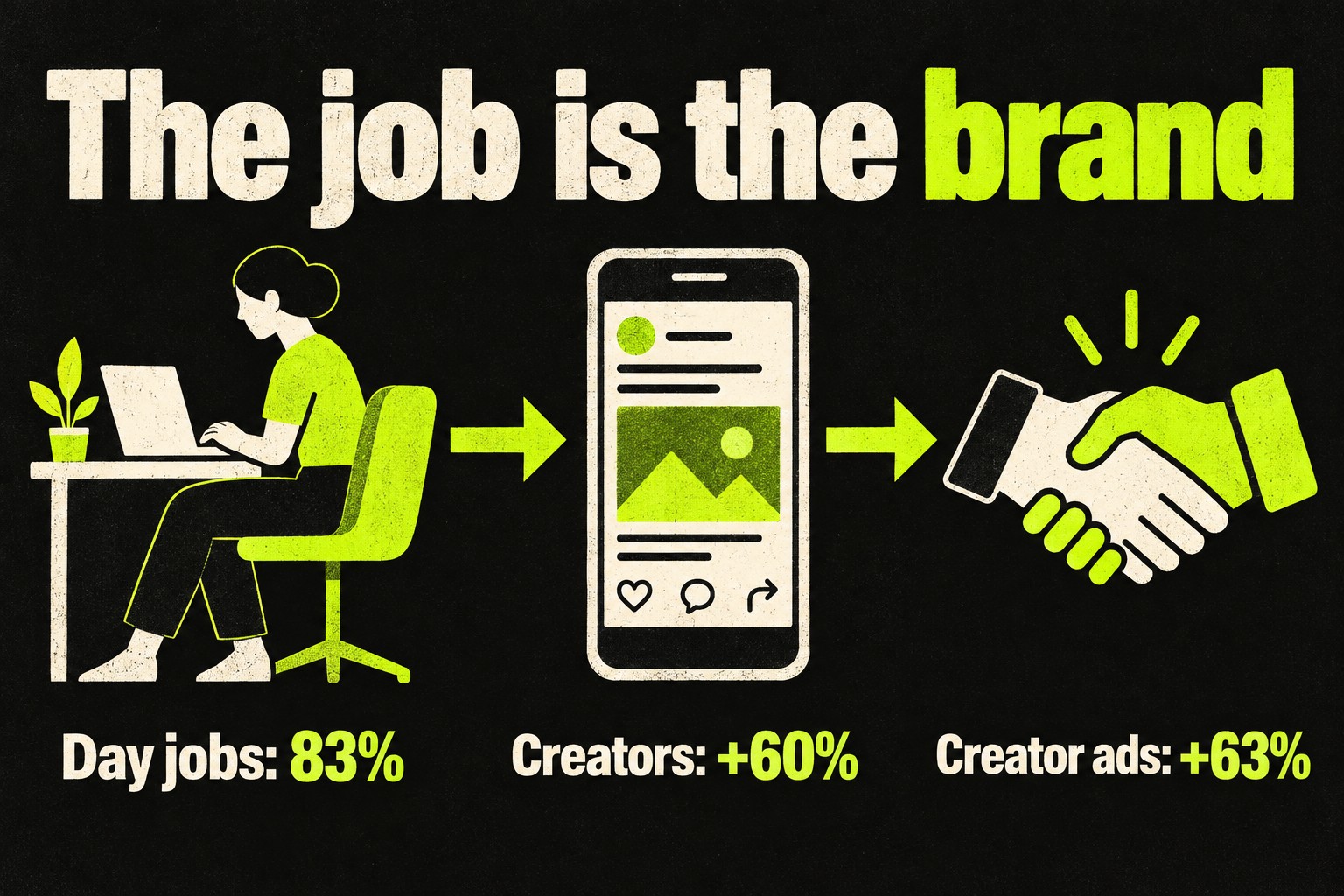
Short on time? LinkedIn says its creator count has grown 60% since 2024, and that 83% of those creators post while holding a day job. The company calls them workfluencers, and brands are paying them: ads featuring creators grew 63% in the year to October 2026. For anyone who posts and comments to grow an audience, the useful reading is blunt. The job you already do is the credential buyers trust. Write from it, and drop the pressure to perform a full-time creator act, because the data says the people winning do not have one either.
The numbers LinkedIn put out
In the week around Microsoft's FY27 Q1 earnings on October 28, 2026, LinkedIn released a run of creator figures. CEO Dan Shapero said creators on the platform are up 60 percent since 2024, and that 83 percent of them post while holding a day job, as reported by Inc.'s Nicole Ramirez on October 30. LinkedIn's favorite example of the breed is a Kraft Heinz researcher who posts about tasting food past its sell-by date. Shapero said these workfluencers are landing brand deals worth hundreds to tens of thousands of dollars, and framed the ceiling honestly: "For most people, it's not a replacement for a day job. It's a way to expand how they build their career."
The commercial side arrived with the earnings. On the call, Satya Nadella said LinkedIn "engagement continues to deepen across our more than 1.4 billion members, with time spent viewing content in the Feed up over 15 percent year over year" (Microsoft's transcript, October 28, 2026). Shapero's companion update, reported by Social Media Today on October 29, added that paid video ads grew 25% year over year and ads featuring creators grew 63% in the same period. We unpacked the earnings themselves, and the gap between 1.4 billion members and actual readers, when the member milestone landed.
One caveat before you quote any of this: Inc. notes that LinkedIn has not published how it defines a creator or what period the 60% covers. These are the platform's numbers about itself, chosen because they flatter it. The direction is still informative, and it is backed by buyer-side evidence below, but treat the precision loosely.
What brands are actually buying
A 63% jump in creator ads needs explaining, because the people being sponsored are not professional entertainers. They are researchers, recruiters and finance leads with modest followings. The explanation is in LinkedIn's own buyer research. A 2025 LinkedIn and Ipsos study, cited in the same Inc. column, found 55% of B2B marketers already use creator marketing on LinkedIn, with another 29% planning to start within a year. And LinkedIn's 2026 Global B2B Marketing Outlook, conducted by YouGov, found that 56% of B2B buyers who use creators rely on creator input at the final stage of a purchase, to confirm a recommendation.
Read that second number carefully. The final stage of a purchase is where a buyer checks whether the claims are believable, and what they want there is not reach. It is someone who can be checked against real work. Ogilvy's Rahul Titus put it plainly on a LinkedIn panel at Cannes, quoted in the Inc. piece: "People trust people more than they trust brands." The researcher who actually tastes the expired food is credible in a way no brand account and no full-time content professional can be. The 63% is money following that credibility.
The feed already mocked its way to the same conclusion
You can watch the same sorting happen from below. In an r/smallbusiness thread on October 26, a founder asked why their LinkedIn presence was going nowhere, and the top reply, at 26 upvotes, was a question: "Are you telling stories about what your recent trip to a petting zoo taught you about B2B sales?" Another reply in the same thread said company pages get almost no engagement and that you have to post from a personal standpoint as the founder.
The mockery is not aimed at posting, or at expertise. It is aimed at manufactured insight, the lesson reverse-engineered from an anecdote to look like content. That is the same category LinkedIn's quality systems are built to bury, a machinery we walked through when LinkedIn explained how it detects AI slop. What survives both the mockery and the detectors is the same thing brands are now paying for: specific detail from work you verifiably do.
What this means if you post and comment to grow
Three practical consequences, if you are a founder, consultant or operator building an audience on the side.
Your material problem is already solved
The 83% figure describes where winning content comes from: the job. The client question you answered on Tuesday, or the number that surprised you this quarter. A full-time creator has to simulate that supply. You have it by default, and the only decision is whether you write it down.
Small audiences now have an economic floor
In a separate column on October 28, Ramirez worked through the economics of Advice Sessions, the paid consultations LinkedIn launched in October. LinkedIn says more than 80% of its creators build content alongside another role, and sessions price trust rather than reach: 3,000 followers earn almost nothing from ad revenue, but if those 3,000 are the operators and buyers in one industry, a handful of booked calls a month is real income. We covered the whole monetization bundle, including its verification gates, in LinkedIn will now pay creators.
The platform's incentives now protect you
Time spent up 15% is the number LinkedIn's leadership reported next to Microsoft's earnings, and the coverage credits it to a year of feed cleanup. A platform earning real money from genuine practitioner credibility has an investor-grade reason to keep burying the imitation kind. Posting honestly from your work used to be the slow path. It is now the path the ranking systems and the ad product both point at.
What to do now
- This week: source posts from this week's work. One specific thing you did or learned, with the detail only a practitioner would know. That detail is the credential; vague lessons are the petting zoo post.
- This month: narrow your subject to what you demonstrably do. Brands search for creators by expertise, buyers check you at the decision stage, and an account about one checkable subject passes both tests.
- Ongoing: treat comments as practitioner evidence too. A specific, informed reply on a post your buyers already read proves the same credibility a post does, and it compounds daily. That habit is the one Commentify exists to keep up when you are busy doing the actual job.
One thing not to do: do not quit, and do not invent a creator persona. The entire dataset says the day job is the asset. Trading it for a content calendar means becoming the thing the feed has learned to skip.
Frequently asked questions
What is a workfluencer?
LinkedIn's term for people who build a creator audience while holding a regular job, posting about the work they actually do. As of October 2026, LinkedIn says 83% of its creators fit this description, and that creator numbers overall are up 60% since 2024.
Do you need a big following to earn on LinkedIn?
Less than before. Advice Sessions, launched in October 2026, lets Premium subscribers sell one-on-one consultations with no follower threshold in LinkedIn's description of the feature. The constraint is whether the audience you do have contains people who would pay for your judgment.
Are LinkedIn's creator numbers reliable?
They are self-reported and loosely defined. LinkedIn has not said how it counts a creator or what period the 60% growth covers, a gap Inc. flagged in its coverage. The buyer-side surveys from Ipsos and YouGov support the direction, so trust the trend and hold the exact figures lightly.
The bottom line: as of October 2026, LinkedIn's creator economy is mostly people with day jobs, and the buyers and the ranking systems now reward the same thing: proof you still do the work. Write from the job, keep the subject narrow, and let the people performing expertise compete with each other.