Table of Contents
- 1. What LinkedIn does when it finds a pod
- 2. The ban arrived in three steps
- 3. The detection has moved outside LinkedIn
- 4. What counts as a pod, and what does not
- 5. What to do now
- 6. Frequently asked questions
- 6.1. Are engagement pods against LinkedIn's rules?
- 6.2. Can LinkedIn actually tell if I'm in a pod?
- 6.3. What happens to automated comments on LinkedIn?
Short on time? LinkedIn's rules now ban engagement pods by name. Its 2026 statement on authentic content calls them inauthentic activity that "erodes trust and is not allowed on LinkedIn," and lists the enforcement: reach limits on posts that look artificially boosted, automated comments dropped from "Most Relevant" and sometimes hidden outside the commenter's network, pod groups removed, and warnings to members that name account restrictions and removal from programs like Top Voices. The newer problem for pod members sits off the platform. In November 2026, Favikon added pod detection to the creator score brands use for vetting, and its worked example puts the cost at three tiers of creator ranking. If you are in a pod, leave it this week, then read your own comment sections the way a buyer would.
What LinkedIn does when it finds a pod
LinkedIn's statement, "What We're Doing to Support Authentic Content and Conversations", defines the thing it is banning: "a coordinated group of people that like, comment and share posts to attempt to boost visibility and virality." It then lists steps it says it has already taken. LinkedIn has removed groups showing pod behaviour, and has contacted members whose activity suggested pod participation or automation, warning them about account restrictions and removal from programs including Top Voices.
The same statement covers automated comments, which it defines as comments posted by a browser extension, script or third-party tool. When it detects one, LinkedIn says it may keep the comment out of "Most Relevant" and sometimes hide it from people outside the commenter's network, and it may restrict the account that posted it.
The quiet part is how invisible that penalty is. LinkedIn comments are ranked by a relevance model, not shown in order, something we unpacked when a LinkedIn product manager explained how comment ranking works. A comment demoted out of "Most Relevant" still looks published to whoever wrote it. An automated pod can keep posting comments long after LinkedIn has stopped showing them to most readers, and nothing tells its members.
The ban arrived in three steps
This did not happen at once, and the sequence matters because each step was stronger than the last.
In August 2025, LinkedIn added one line to its help pages, reported by Social Media Today: "if we detect excessive comment creation or use of an automation tool, we may limit the visibility of those comments." In November 2025, its VP of product management Gyanda Sachdeva went further: "Our goal is to make engagement pods entirely ineffective," including a crackdown on third-party tools and browser extensions that comment on many posts at once. The March 2026 statement is the third step, where the policy stopped being a warning and became a report of action already taken: pod groups removed and members warned that restrictions could follow.
There is also a reason to expect this to stick. Microsoft's October 2026 earnings put LinkedIn past 1.4 billion members with time spent up 15% year over year, numbers the trade press credits in part to this feed cleanup, as we covered when LinkedIn passed 1.4 billion members. A crackdown that feeds the number the CEO reports does not get rolled back.
The detection has moved outside LinkedIn
The "do pods still work" debate assumes the only referee is LinkedIn's feed. As of this month, it is not.
On November 6, 2026, Favikon, whose creator score is used by brands to vet LinkedIn creators before paying them, published the mechanics of an authenticity factor it added to that score in November 2026. It checks for exactly the residue a pod leaves. Regular commenters, defined as people who commented on at least half of your previous nine posts, cost up to 45 points once they pass 5% of your comments. Templated copy-paste comments cost up to 30. Comment floods, where comments outnumber reactions and arrive fast from regulars, cost up to 15 more.
Favikon's worked example is worth reading in full: a creator in a 30-person pod, with around 120 comments per post, scores 58 on those checks against 92 for the same creator without the pod. That turns into a score multiplier of 0.77 instead of 1.14, and drops them three tiers in the ranking brands browse. The pod's extra comments, by Favikon's own accounting, add nowhere near enough engagement to cover the cut.
At least one agency is telling brands to run the same check by hand. Fame, a B2B influencer agency, published a brand guide on November 4 that advises sponsors to read the comments on a creator's recent posts before booking, to rule out pods in the contract brief in writing, and to report on who engaged, by company and role, instead of totals.
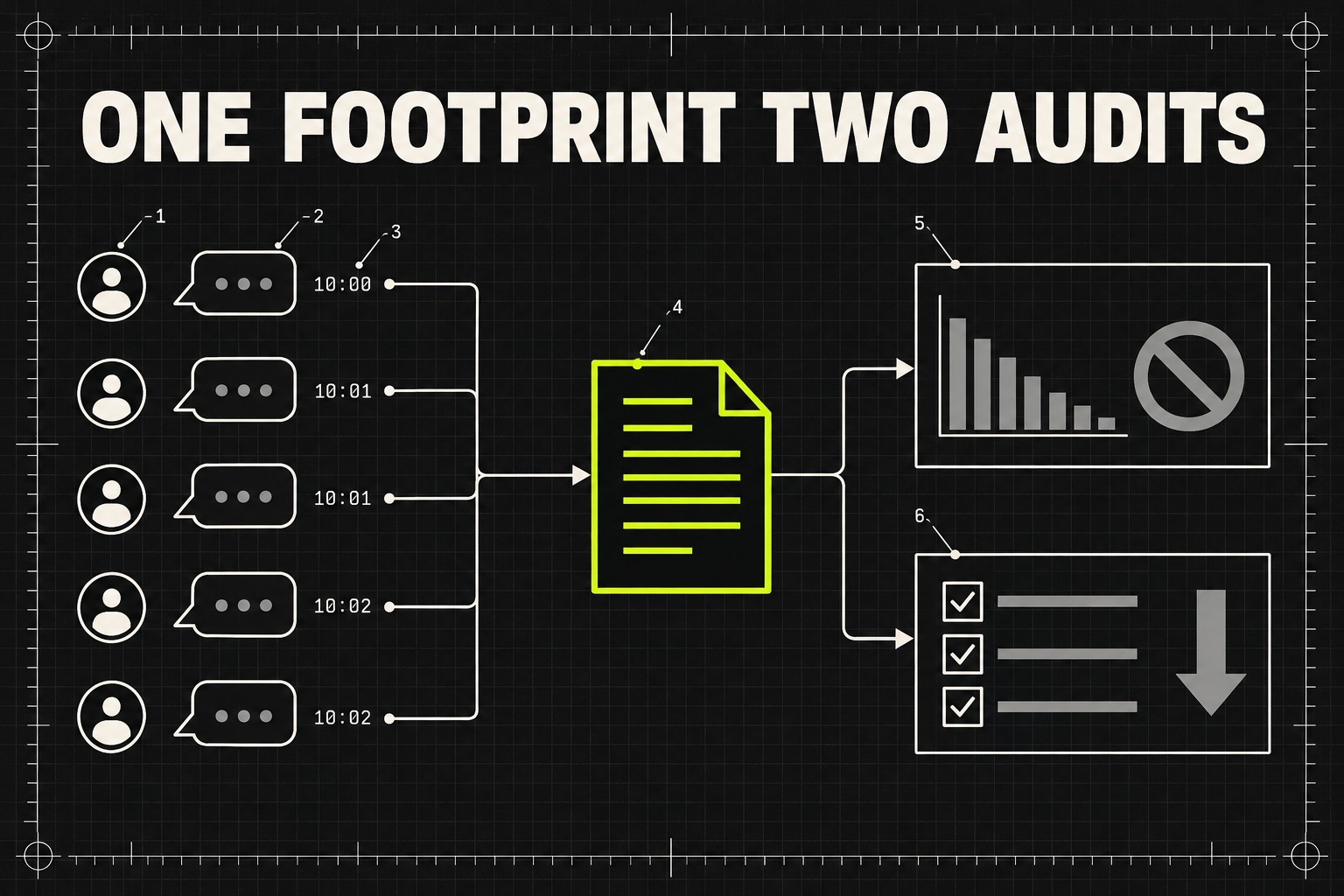
This is the consequence most pod coverage misses. Against LinkedIn, a pod is a bet that your group stays ahead of the classifier. Against a buyer, there is nothing to stay ahead of. Your comment sections are public, the pattern sits in your last five posts for anyone to read, and the reading happens at the exact moment money is on the table.
What counts as a pod, and what does not
Fame's definition is the cleanest test: "The dividing line is the agreement to engage regardless of what the post says." Colleagues who comment because they have something to say are not a pod, and Favikon's thresholds are built so ordinary loyalty costs nothing. The footprint its checks look for is specific: the same names under every post, arriving within minutes, saying something that would fit any post, with more comments than reactions and no conversation afterward. One of those signs means little. Several together are the pattern both audits are tuned to.
That cuts the other way too. If your genuine supporters leave "Great post!" within minutes because you message them every time you publish, you have built the footprint without the pod. The fix is the same either way: fewer announcements, better questions, real replies.
What to do now
- This week: leave any pod, manual or automated. WhatsApp group, Slack channel, browser extension, paid service. LinkedIn says it limits the reach of posts it flags as artificially boosted, and the comments it left behind are the evidence.
- This week: audit your last five posts like a buyer. Open the comments and look for the footprint above. If a stranger could spot the circle, so can a scoring tool.
- This month: make early engagement something real people can supply. End posts with a question that has an answer, then reply like you mean it. Our guide to increasing LinkedIn engagement covers what reliably starts threads.
- Ongoing: put the pod time into commenting on other people's posts. A thoughtful comment rides the author's distribution and reaches people who never followed you. It is the one growth mechanic in this story that no audit penalises, because it is the behaviour both LinkedIn and the vetting tools are trying to protect.
Two things not to do. Do not purge loyal commenters who genuinely read you; the thresholds leave room for normal support. And do not shop for a quieter pod. Every pod's selling point is that it has not been detected yet, and that is not a promise anyone can keep.
Frequently asked questions
Are engagement pods against LinkedIn's rules?
Yes. LinkedIn's 2026 statement on authentic content calls pods a form of inauthentic activity that "erodes trust and is not allowed on LinkedIn." It says it limits the reach of artificially boosted posts, removes groups showing pod behaviour, and may restrict participating accounts.
Can LinkedIn actually tell if I'm in a pod?
LinkedIn says it uses technology and human review to spot suspicious engagement patterns, and it has already removed groups and contacted members it suspected of pod activity. Independently of LinkedIn, creator-vetting tools like Favikon now flag the same comment patterns from public data.
What happens to automated comments on LinkedIn?
Comments posted by a browser extension, script or third-party tool are not allowed. When LinkedIn detects them, it may keep them out of the "Most Relevant" comment view, sometimes hide them from people outside the commenter's network, and restrict the account responsible.
The bottom line: a pod's entire product is a comment section, and comment sections are public. LinkedIn reads yours with classifiers, buyers read it with scoring tools, and both are looking for the same few tells. The engagement that survives both audits is the kind that was never coordinated: real comments, on your posts and on other people's.