Table of Contents
- 1. What the published code actually says
- 2. The mention exception X added on November 24
- 3. Big accounts are skipped, which changes whose advice you should trust
- 4. What to do now
- 5. Frequently asked questions
- 5.1. What is X's fast reply spam label?
- 5.2. Does one labelled reply affect my whole account?
- 5.3. Can I reply instantly when someone tags me?
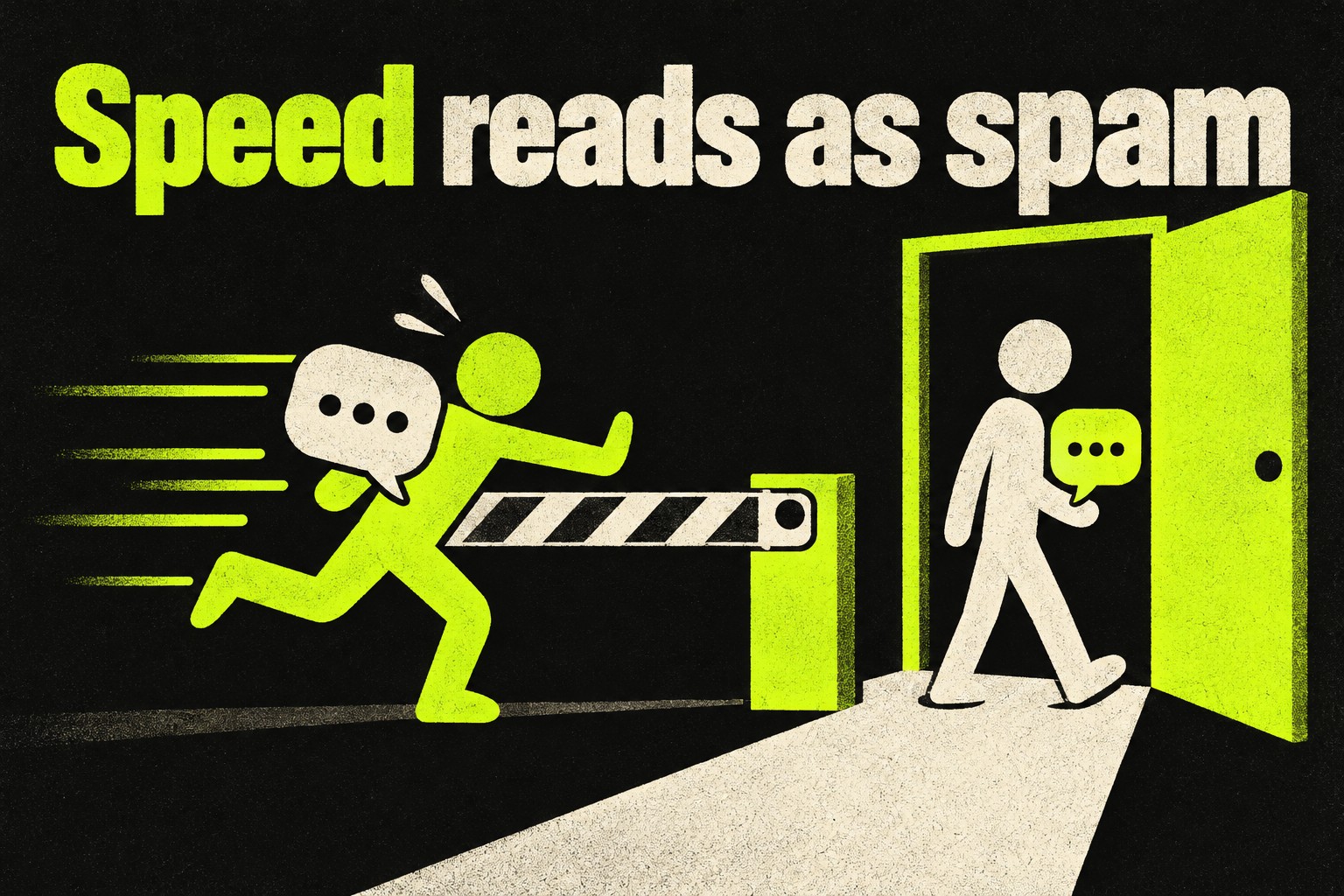
Short on time? X's open-source algorithm labels replies that arrive too fast under posts that did not invite you. A labelled reply is hidden from everyone who does not follow you for 30 days. On November 24, 2026, X added the one exception: if the post you replied to contains your typed @handle, the check is skipped. The code also skips accounts above a follower and credibility threshold, so the penalty lands almost entirely on small accounts. If replying is how you grow on X, being first is no longer an edge. It reads as a bot signature.
What the published code actually says
The rule sits in X's public algorithm repository. In the post enforcement rules, a reply that X's classifier has tagged as fast reply spam gets a SpamHighRecall label with a lifetime of 2,592,000,000 milliseconds, which is exactly 30 days (enforcement_post.yaml, read November 25, 2026). The label attaches to that one reply, not to your account. According to howXranks, a reference site built from the repository's November 18 commit, a post carrying that label is dropped from feeds as spam for 30 days. ClimbX's reading of the same rule is that people who do not follow you will not see the reply, while your followers still do. Kahawatungu's November 24 report adds that the person you replied to does not get the notification, which is the part that stings: the whole point of the reply was reaching them.
What counts as too fast is not in the repository. The published rules only say what happens once a classifier has already tagged the reply; the classifier's cutoffs stay private. The working theory in the coverage is that a reply landing before a human could plausibly have read the post is what trips it. Nobody outside X can confirm a number, and I would not trust anyone who claims one.
There is an account-level layer too. ClimbX compared the repository commits and found that rules added on October 23, 2026 can give an account flagged as a reply-spam bot a 30-day account-wide label plus a check that a real person runs it, or a temporary suspension. One labelled reply is an annoyance. An account label drops your posts from For You for your followers as well.
The mention exception X added on November 24
A new file appeared in the repository's November 24 commit: invited_reply.rs. It was not in the November 21 version. Before the spam label is applied, the code now fetches the post you replied to and collects every account whose handle is typed in its visible text. If your account is on that list, enforcement is skipped. You were invited, so you can answer as fast as you like.
Two details in the code matter in practice. The handles X inserts automatically at the top of a reply thread sit outside the post's visible text range, so they do not count as an invitation. Someone has to have typed your @handle into the post itself. And when the code cannot read the parent post at all, it skips enforcement rather than guessing, so the exception fails in your favour.
This is a real loophole for one specific workflow: when a prospect or a peer tags you and asks for your take, answer immediately. Speed there is safe by rule, and it is also just good manners.
Big accounts are skipped, which changes whose advice you should trust
The same rules file skips accounts above a follower threshold and accounts with a high credibility score before any spam check runs. The thresholds in the public file are placeholders, marked in the comments as mock values to reduce gaming, but the structure is plain: the filter is pointed at small and mid-size accounts.
I think this is the part most coverage undersold. The reply-first-reply-fast playbook was written and publicised by large accounts, and large accounts are exactly the ones these checks skip. When a 300k-follower account says speed-replying viral posts built their audience, that tactic is now being graded under different rules than yours. Copying it at 800 followers means running a filter they never face.
Placement seems to matter far more than volume. The ClimbX author reports roughly 400 replies a day in September 2026 with exactly one labelled post out of 11,897, and notes that about 90 percent of those replies answered people on his own threads. That matches X's own Authenticity policy, which bans "bulk, aggressive, high-volume unsolicited replies, mentions, or direct messages". The operative word is unsolicited. Replies to people already talking to you are the safest replies on the platform.
What to do now
Five steps, ordered by urgency.
- Today: stop racing notifications on strangers' viral posts. The first-comment habit is the exact pattern this label exists to catch. If you did not read the post, do not reply yet. A reply that lands two minutes later and says something real beats one that nobody outside your followers will ever see.
- Today: treat typed tags as green lights. When a post contains your @handle, reply as fast as you want. The November 24 code makes that explicit. The auto-mention in a reply chain does not qualify.
- This week: move reply volume toward mutuals and your own threads. X's For You feed generally drops replies from accounts the reader does not follow (oon_retweet_reply_filter.rs), so a reply's natural audience is your own followers and mutuals. Answering people on your own posts is the lowest-risk replying you can do: ClimbX's author puts about 90 percent of his replies there. The feed is also ranking posts by whether people finish reading them, so a considered reply under a substantial post keeps paying for days.
- This month: check your labels in Under the Hood. X shows you what it has flagged at x.com/i/jf/under_the_hood, for accounts at least a year old with ten or more posts in the prior month, per ClimbX. One labelled reply is noise. Dozens means your pattern looks automated to the classifier.
- If you are already labelled: change the pattern and wait. The label runs on a fixed 30-day timer in the code, and going quiet does not clear it faster. Keep posting normally while it runs out.
Two things not to do. Do not spin up a second account to keep replying; X can suspend other accounts it links to a flagged one, which is how a temporary problem becomes a permanent one. And do not paste the same line or an unedited AI draft under post after post. The same rules file carries a separate label for machine-written replies, and LinkedIn also appears to weigh comment pacing and quality. Generic speed loses on X outright, and the signs on LinkedIn point the same way. If any part of your replying is tooled, the pacing has to live below the tool, a point we made about the unofficial X API.
Frequently asked questions
What is X's fast reply spam label?
It is a spam label in X's open-source enforcement rules, applied to a reply that X's private classifier tags as fast reply spam, which coverage reads as a reply arriving faster than a person could read the post, under a post that did not tag you. The labelled reply is hidden from people who do not follow you for 30 days. Your other posts are unaffected.
Does one labelled reply affect my whole account?
No. The fast reply label attaches to the single reply. Account-wide labels exist separately, for accounts X's models flag as reply-spam bots, and those drop your posts from For You for followers too. One label is noise; a recurring pattern is what escalates.
Can I reply instantly when someone tags me?
Yes. Since the November 24, 2026 update, X's code checks whether the post you replied to contains your typed @handle and skips the spam label if it does. Automatic mentions at the top of a reply thread do not count as a tag.
The bottom line: as of November 2026, X's published code treats reply speed as a spam signal, exempts the accounts big enough to have popularised speed-replying, and spares you only when the post typed your name. Reply where you were invited, write the reply only you could write, and let someone else be first.