Table of Contents
- 1. What LinkedIn is actually testing
- 2. Why LinkedIn is doing this now
- 3. The number that suddenly matters: who actually follows you
- 4. What this means if you grow by commenting
- 5. What to do now
- 6. One caveat: LinkedIn has built this tab before
- 7. Frequently asked questions
- 7.1. What is LinkedIn's Network tab?
- 7.2. Will Company Pages appear in the Network tab?
- 7.3. When does the two-tab feed roll out to everyone?
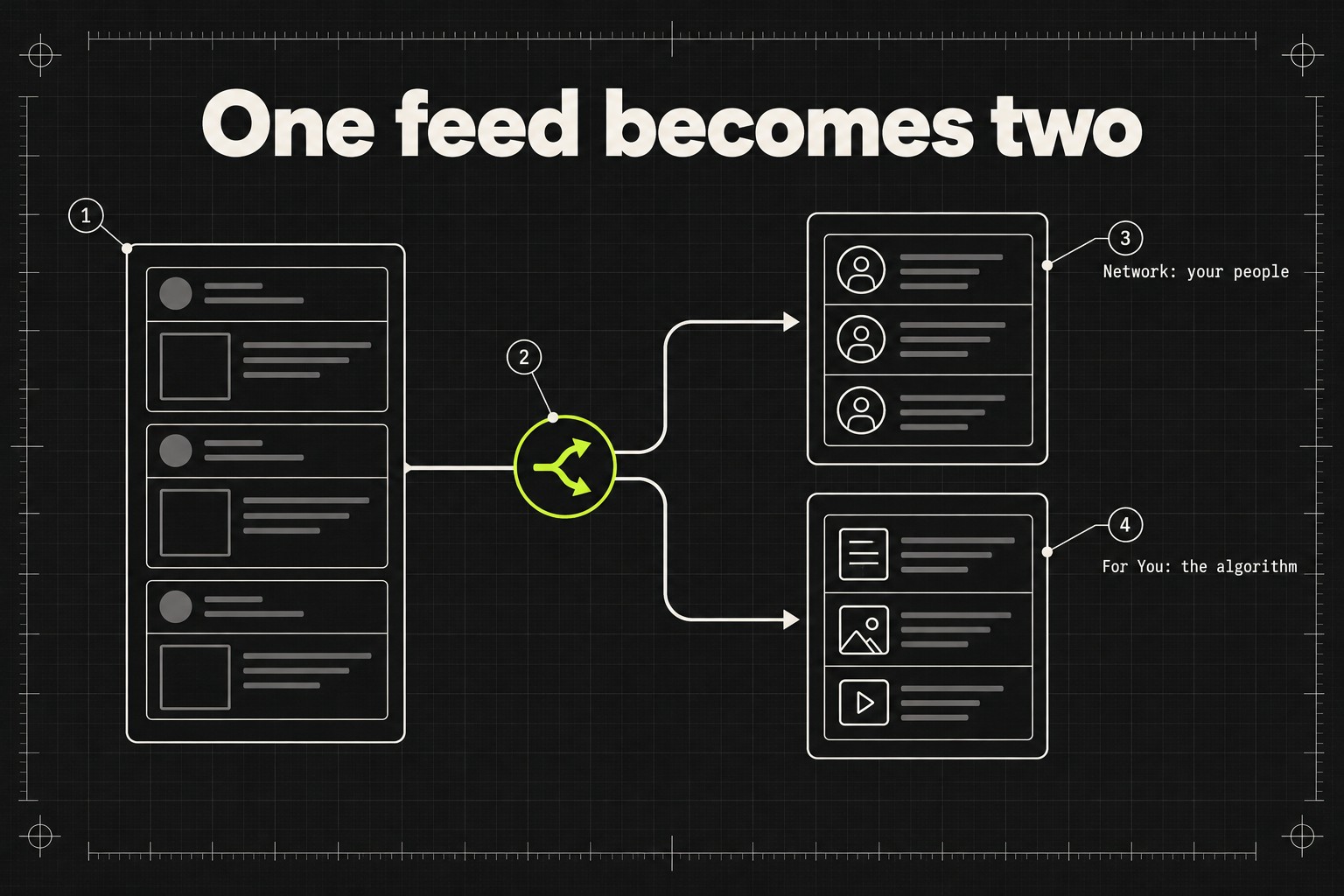
Short on time? LinkedIn is testing a feed split into two tabs: Network, which shows only posts from people you have connected with or followed, and For You, where the algorithm picks. Chief product officer Hari Srinivasan announced the test on September 18, 2026, and as of mid-October it is running for a limited group of members. If the split sticks, the people who chose to follow you become the only reach you fully own. Do not rebuild your strategy around a test LinkedIn may yet kill, but do start watching follower growth the way you watch impressions, because in a Network tab the follower list is the ceiling.
What LinkedIn is actually testing
On September 18, Srinivasan announced a new design with two tabs at the top of the feed. "The Network tab helps you stay connected to your network, ie the people you have explicitly connected or followed. We all want more real connection with real people, and we hope this plays a small part in rebuilding that world," he wrote. The For You tab, in his description, helps you "stay informed" with perspectives from "real practitioners inside and outside your network."
Israel Hayom reported on October 12 that the test is live for a limited number of users. LinkedIn has not said how many members are in it, where it is running, when it might expand, or which tab is winning engagement. The main algorithmic feed stays the default for everyone else.
The For You side is not new machinery. In March 2026, LinkedIn upgraded its feed ranking to better read what a post is actually about and how a member's professional interests shift over time, using signals like industry, skills and what they read or scroll past. What is new is the wall between the two kinds of content: posts from people you picked on one side, posts an algorithm picked on the other.
Why LinkedIn is doing this now
The split lands after a year of LinkedIn fighting its own feed. It has gone after engagement pods, the groups that trade likes to game distribution, and in August it added a "Seems like AI slop" report option. By September it was claiming a 40% decline in views of content it classifies as slop, with more than a million members having used the report button, numbers we dug into when LinkedIn explained how it detects AI slop.
Members have been louder than the press releases. An October 2 thread on r/linkedin asking "Is anyone else's LinkedIn feed full of irrelevant posts?" drew 58 comments; the top reply was four words: "The feed is useless." That is the complaint a connections-only tab is built to answer. A feed of people you chose cannot show you a stranger's engagement bait.
The number that suddenly matters: who actually follows you
Here is the part most coverage skips. In the main feed, the algorithm lends you reach. It shows your posts to people who never followed you, which is why impressions can look healthy while your follower count barely moves. A Network tab calls in that loan. There, you reach the people who picked you, and nobody else. State of Brand made this point sharply for Company Pages, and it cuts even harder when you look at the data.
Metricool's 2026 LinkedIn study, which analyzed 673,658 posts from 63,108 accounts, found that only 7% of Company Pages grew their following last year, while personal profiles generated 63% higher engagement than pages. Most pages have been posting to an audience the algorithm sent them, not one they built. If reach ever narrows to followers, those pages find out how small their real audience is.
And LinkedIn has not said whether followed Company Pages appear in the Network tab at all. Srinivasan's description talks about people. Personal profiles, run by founders and operators with real connections, are the accounts this test favors either way.
What this means if you grow by commenting
Commenting is the one growth mechanic that works in both tabs, because a comment rides on someone else's distribution. When you comment on a post, you show up in front of that author's audience whatever your own follower count is, in whichever feed their post surfaces. That mechanism survives the split untouched.
What changes is what a comment is for. If the Network tab matters, a comment's real payoff is the follow it earns. The profile visits a sharp comment generates become follows, and follows become the audience you keep when the algorithm stops lending. The habit we described in how LinkedIn comments work in 2026, a few genuinely useful replies a day on posts your buyers already read, is exactly how you grow the one number the Network tab counts.
The For You tab pulls in the other direction, and it rewards something different: topic clarity. The March ranking upgrade classifies posts by subject and matches them to professional interests, and LinkedIn says it wants concrete, firsthand insight there rather than templated motivation. A post with one identifiable subject, written from work you actually did, is the kind of thing a recommender can confidently hand to a stranger in your field.
What to do now
Here are four moves, in order of urgency. None of them involve panic.
- This week: start tracking follower and connection growth alongside impressions. If reach ever narrows to the people who chose you, that list is the number that matters, and most accounts have never watched it.
- This month: make commenting a daily habit rather than a spare-time one. It converts strangers into followers today and it is the only mechanic guaranteed a seat in both tabs. This is the job Commentify automates if you cannot sit in the feed every day.
- This month: give every post one clear subject. The For You recommender has to be able to answer "what is this about and who needs it." Vague broetry gives it nothing to work with.
- This quarter: if you run a Company Page, shift weight toward the people behind it. Only 7% of pages grew their following in Metricool's data, and the Network tab may not include pages at all.
Do not join an engagement pod to inflate your numbers before the split lands; LinkedIn has spent a year hunting pods and a connections-only feed makes coordinated amplification easier to spot, not harder. And do not rewrite your content strategy around a tab that is still an experiment.
One caveat: LinkedIn has built this tab before
LinkedIn has a habit of testing a way out of its algorithm and then keeping the algorithm. It ran a five-week connections-only "My Network" feed test, gave a small group of US members "For You," "Following" and "News" tabs in 2025 and then ended the test, and tried topic-based suggested feeds in June 2026. None shipped. Social Media Today's Andrew Hutchinson, who has tracked all of them, rates this one's prospects as slim too.
So the tab may die. The direction will not. Every time the feed fills with pods and slop, LinkedIn reaches for the same fix: push members back toward people they actually chose. That is the signal worth acting on, and it is the same one behind how the engagement algorithm already weighs relationships. Audiences you earned person by person keep their value under every version of the feed. Audiences the algorithm lent you can be called back at any time.
Frequently asked questions
What is LinkedIn's Network tab?
A feed being tested since September 18, 2026 that shows only posts from people you have explicitly connected with or followed, with no algorithmic recommendations mixed in. It sits beside a For You tab of algorithm-picked posts, and the main feed remains the default.
Will Company Pages appear in the Network tab?
LinkedIn has not said, as of October 14, 2026. Srinivasan's announcement describes the tab in terms of people you connect with or follow, and does not mention pages. That single detail decides how much the test matters for brands.
When does the two-tab feed roll out to everyone?
Nobody has said. LinkedIn has not disclosed how many members are in the test, where it is running or when it might expand, and its previous alternative-feed tests in 2025 and June 2026 ended without shipping.
The bottom line: treat the two-tab test as a preview of the question LinkedIn keeps asking: how much of your reach did you earn, and how much was lent to you? Grow the earned part. Comment where your buyers read, post with a clear subject, and count your followers like they are the ceiling, because one day they might be.